
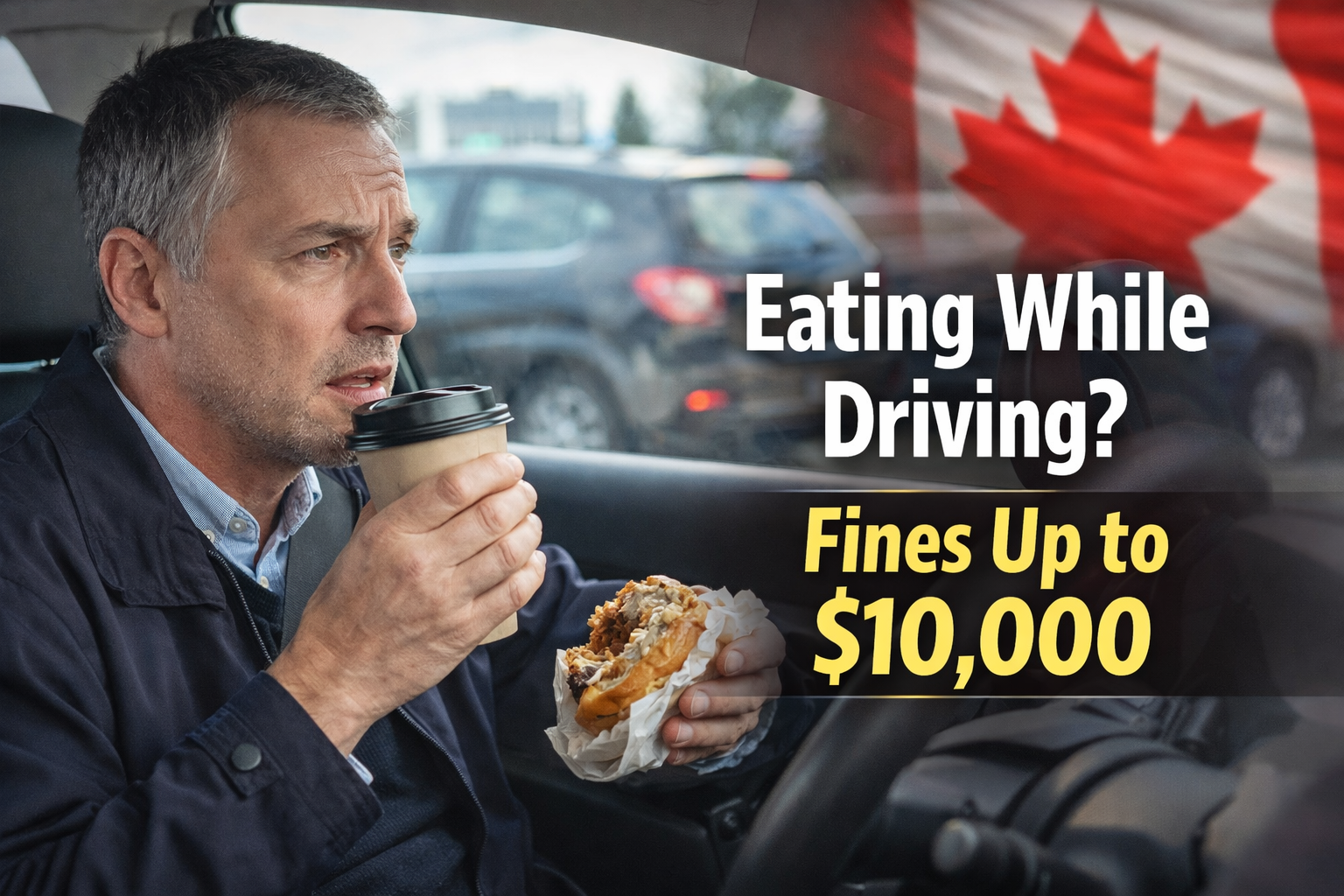
Canadian drivers are being warned that a once-common habit could now cost them thousands of dollars. Eating while driving is increasingly being treated as distracted driving across Canada, and under stricter enforcement rules, motorists could face fines reaching up to $10,000 in serious cases.
Authorities say the crackdown comes as distracted driving remains one of the leading causes of crashes nationwide. What may seem like a harmless bite or sip can quickly turn into a costly offence—especially if it compromises vehicle control or leads to an accident.
Why Canada Is Cracking Down on Eating While Driving
Road safety officials across Canada are expanding their interpretation of distracted driving to include any activity that diverts a driver’s hands, eyes, or attention, including eating or handling food. While the laws themselves may not be entirely new, enforcement is becoming far stricter.
Police now have greater discretion to issue tickets if eating interferes with safe driving. Something as simple as unwrapping food, steering with one hand, or looking down at a meal can be enough to justify a citation.
How Much Could Drivers Be Fined?
Penalties vary by province, but fines escalate quickly depending on circumstances. Repeat offences or incidents involving unsafe driving can trigger severe consequences.
| Violation | Possible Fine | Other Penalties |
|---|---|---|
| Minor distracted driving (eating) | $300 – $1,000 | Demerit points |
| Repeat offence | $1,000 – $3,000 | Points, suspension risk |
| Unsafe driving linked to eating | $3,000 – $5,000 | Insurance impact |
| Collision caused by distraction | Up to $10,000 | Licence suspension, court action |
Insurance premiums may also rise sharply following a distracted-driving conviction.
Not a New Law—But a New Level of Enforcement
Officials stress that this is less about banning food outright and more about changing driver behaviour. Transport authorities argue that eating often leads to delayed reaction times, drifting between lanes, and reduced awareness of pedestrians and cyclists.
As a result, enforcement campaigns are ramping up in urban centres and during rush hours. Drivers are being advised to finish meals before driving or pull over safely if they need to eat.
How Police Are Catching Distracted Drivers
Canadian enforcement agencies are becoming more proactive. Officers are trained to watch for visual cues such as drivers looking down, holding food, or steering one-handed. Some regions are using unmarked vehicles, roadside observation points, and post-collision reviews to identify distractions.
With increased vigilance, authorities say drivers should no longer assume eating behind the wheel will go unnoticed.
What This Means for Canadian Drivers
The message is clear: full attention is now expected at all times behind the wheel. By targeting everyday habits like eating, officials hope to reduce preventable crashes and make roads safer for everyone.
For drivers, the safest—and cheapest—option is simple: eat while parked, not while driving.
Frequently Asked Questions
Is eating while driving illegal everywhere in Canada?
It is treated as distracted driving in many provinces if it affects safe control of the vehicle.
Can fines really reach $10,000?
Yes. Severe cases involving accidents or repeat offences can result in fines at that level.
Will I get demerit points for eating while driving?
In many provinces, distracted driving offences include demerit points.
What’s the safest option during long drives?
Pull over and eat while parked to avoid penalties and reduce accident risk.